Published September 7, 2026
A visitor sent by an AI assistant buys 42% more often
In the first quarter of 2026, Adobe Analytics found that retail visitors arriving from an AI assistant converted 42% better than visitors from any other source. A year earlier they converted worse. What flipped, and what it means for the pages an assistant reads.
Most numbers about AI and shops are about volume: how many visits, how fast it grows. This one is about quality, and it is the one I would put in front of anyone who runs a shop.
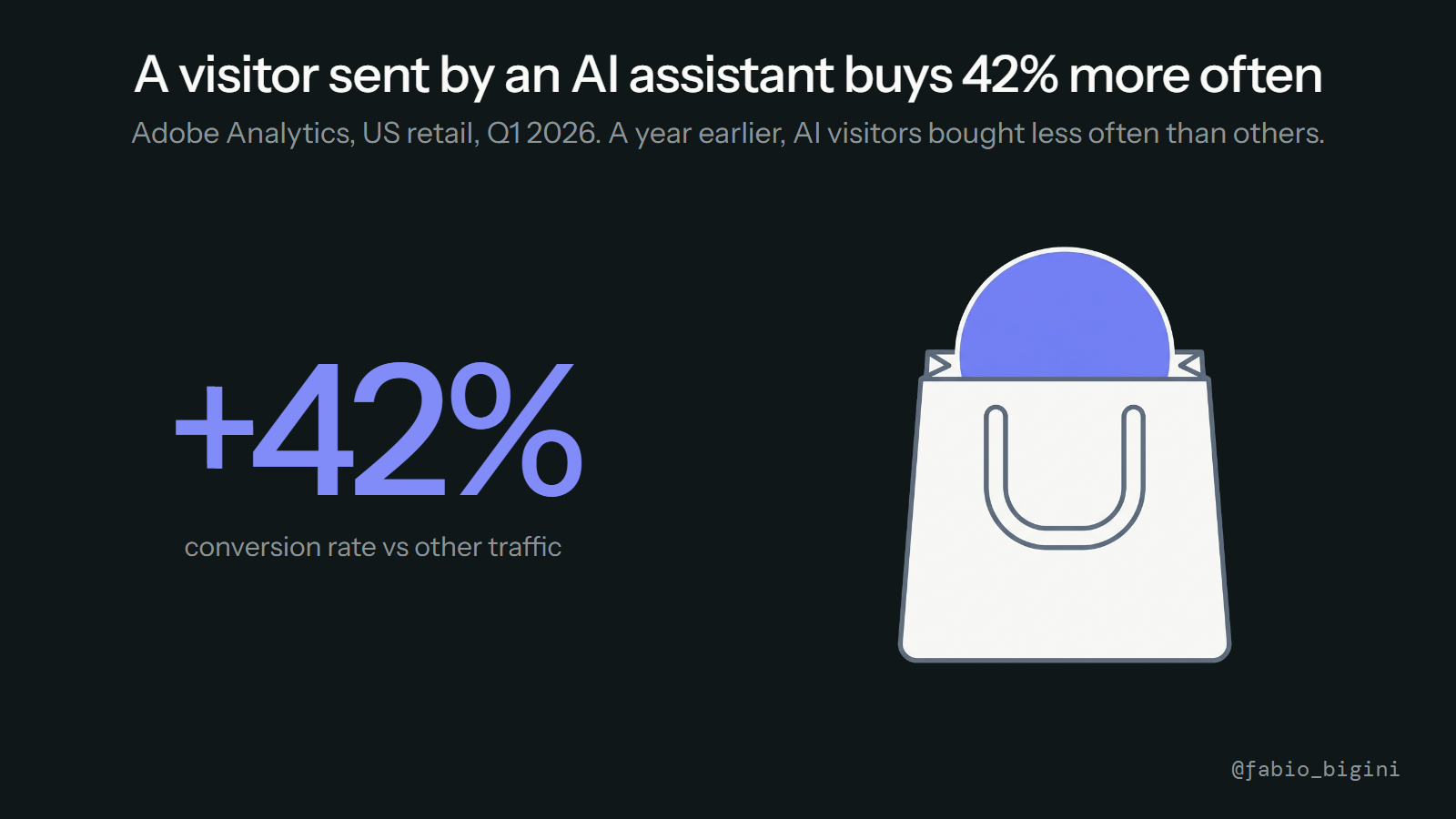
Adobe Analytics, which measures over a trillion visits to US retail sites, compared visitors who arrived from an AI assistant with visitors from every other source. In March 2026 the AI-referred visitors converted 42% better. Twelve months earlier, the same kind of visitor converted 38% worse. (Adobe, via TechCrunch)
The flip in one table
| AI-referred visits against other sources | March 2025 | March 2026 |
|---|---|---|
| Conversion rate | 38% worse | 42% better |
| Revenue per visit | lower | 37% higher |
| Time on site | 48% longer | |
| Pages per visit | 13% more |
It is rare to see a traffic source change sign in a year. Paid search, email and organic traffic each convert at roughly the same rate they did five years ago. AI referrals went from the worst source to the best.
Why it flipped
Two things changed, and both are in Adobe's own data.
The visitor changed. In early 2025, people asking an assistant about products were mostly curious: testing the tool, asking broad questions, clicking through to look. By 2026 they are shoppers. Adobe's survey of just over 5,000 US consumers found 39% had used an AI tool for online shopping, 85% of those said it improved the experience, and 66% said they now trust the results to be accurate. Trust turns a research tool into a buying tool.
The click changed. An assistant answers a specific question: which espresso beans under 20 euro, which rain jacket for cycling in the rain, which supplement for sleep with a given dose. By the time someone clicks, the comparison has been done for them. They land on a product page with a decision mostly made. That is why they stay 48% longer and read more pages: they are checking, not browsing.
What it means for the pages an assistant reads
The 42% is not a property of your shop. It is a property of the visitor, and it goes to whichever shop the assistant sends them to.
So the question is not how to convert AI visitors, who already convert. The question is whether you get them at all. An assistant reads a handful of pages and compares what they say: price, the facts the buyer asked about, what makes one product different from the next. A page that states those facts as text is comparable. A page that keeps them in a photo, a PDF or a size chart is not, and it does not get the click.
That is the check worth doing for your five best sellers: ask the assistant the question your customers ask, and see whether it names you. The free check on our home page runs one such question with a live search, and the screenshot is yours either way.
Sources: Adobe Analytics via TechCrunch, 16 April 2026; Adobe, AI-driven traffic surges across industries. Related: Visits to shops from AI assistants grew 393% in a year.