Published September 6, 2026
Visits to shops from AI assistants grew 393% in a year
Adobe Analytics measured traffic that arrives at US retail sites from an AI assistant: up 393% in the first quarter of 2026, converting 42% better than other sources. What is being counted, why the visitors behave differently, and the one question it leaves a shop owner with.
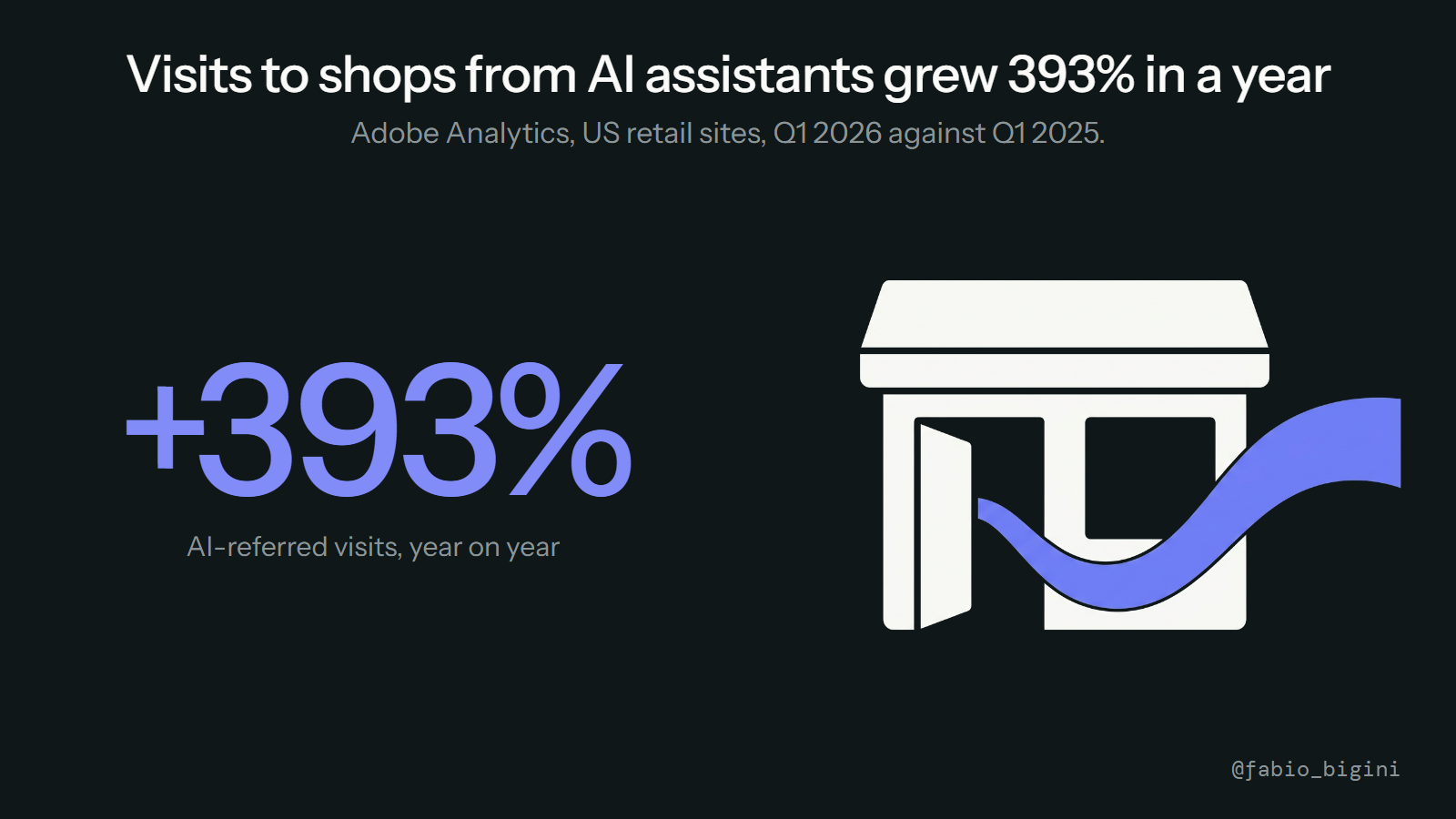
One number from the first quarter of 2026 is worth keeping if you sell anything online. Adobe Analytics, which sits on over a trillion visits to US retail sites, counted the visits that arrived from an AI assistant and compared them with the same quarter a year before. They were up 393%. (TechCrunch on the Adobe report)
Here is what that number counts, what it does not, and why the visitors behind it behave differently from the rest of your traffic.
What is being counted
A visit counts as AI-referred when the browser arrives at the shop from an assistant: someone asks ChatGPT, Gemini, Perplexity or Copilot which product to buy, gets an answer with a link, and clicks it. Adobe sees that referrer across every retail site running its analytics, which is most of the large ones in the US.
The growth is not a single quarter's spike. The same series had AI traffic up 693% year on year over the November and December 2025 holiday season, and up 269% in March 2026 alone. The rate of growth is slowing as the base grows, which is what you would expect. The base is still growing.
What it does not count
Two things, and both matter for how you read it.
It is still a small share of all visits. Adobe says so itself, without publishing the share. Search, email and direct traffic are each far larger. The 393% is growth, not size. Nothing else on a typical shop's traffic report is growing at that rate, and that is the point, but a shop that ignores this for another year will not lose most of its visitors. It will lose a specific kind of visitor.
It only counts the click. When an assistant answers a product question, most of the value happens before anyone clicks. The assistant reads a handful of pages, compares what they say, and names a few products. If yours is not among them, you do not get a smaller referral. You get none, and you never see the question. The 393% measures the shops that were in the answer.
Why these visitors behave differently
This is the part of the report that changed in a year, and it is the part I would pay most attention to.
| Metric, AI-referred visits against other sources | March 2025 | March 2026 |
|---|---|---|
| Conversion rate | 38% worse | 42% better |
| Revenue per visit | lower | 37% higher |
| Time on site | 48% longer | |
| Pages per visit | 13% more |
A year ago an AI-referred visitor was worth less than a visitor from search or email: curious, early, not buying. By March 2026 the same kind of visitor converted 42% better and was worth 37% more per visit.
The likely reason is simple. Someone who arrives from an assistant has already done the comparison. They asked "which espresso beans under 20 euro" or "which rain jacket for cycling in the Netherlands", read the answer, and clicked the one they chose. They land on a product page, not a home page, with a decision mostly made. That is why they read more pages and stay longer: they are checking, not browsing.
Adobe's survey of just over 5,000 US consumers points the same way. 39% said they had used an AI tool for online shopping, 85% of those said it improved the experience, and 66% said they now trust the results to be accurate. Trust is what turns a research tool into a buying tool.
What this leaves a shop owner with
One question, and it is not "how much AI traffic do I get". You can read that in your own analytics, under referrers, and for most shops today it is a small number.
The question is whether your shop is in the answer when an assistant sends people somewhere. The 393% goes to the shops it names. The rest are not in the data.
That is specific to your products, your competitors and the exact questions your customers ask. It is also cheap to find out: ask the assistant the question, and see who it names. The free check on our home page does that for one question with a live search, and the screenshot is yours either way.
Sources: Adobe Analytics via TechCrunch, 16 April 2026; Adobe, AI-driven traffic surges across industries.