Articles on being found by AI
What we measure, what we find, and what moves the answer. Dated, sourced, and mostly our own data.
September 9, 2026
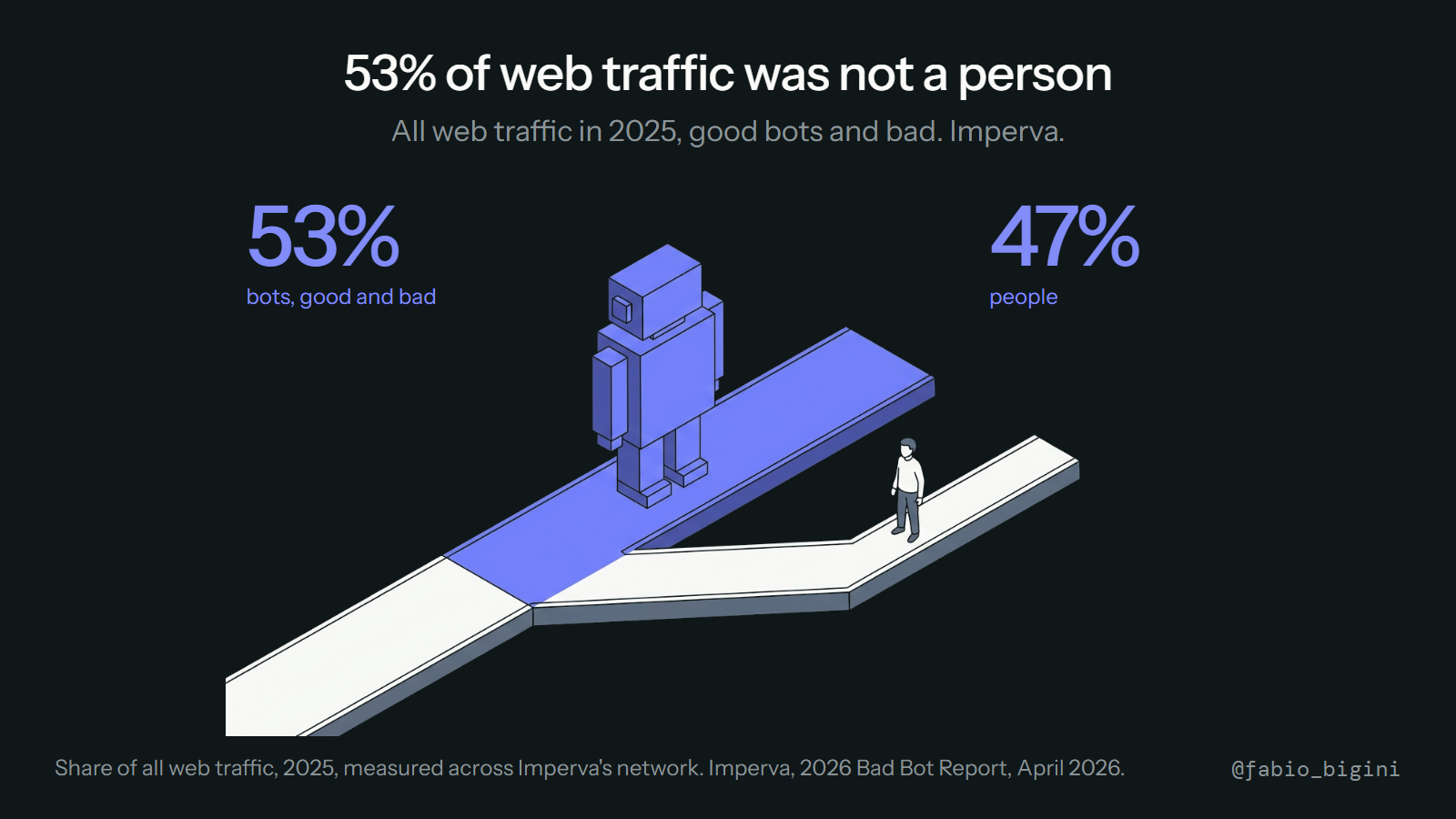
53% of web traffic in 2025 was not a person
Imperva measured every request crossing its network and found automated traffic passed human traffic for the second year running: 53% machines, 47% people. What counts as a bot, why your analytics almost certainly does not show this, and what it means when most readers of your product pages are software.
Read →September 9, 2026
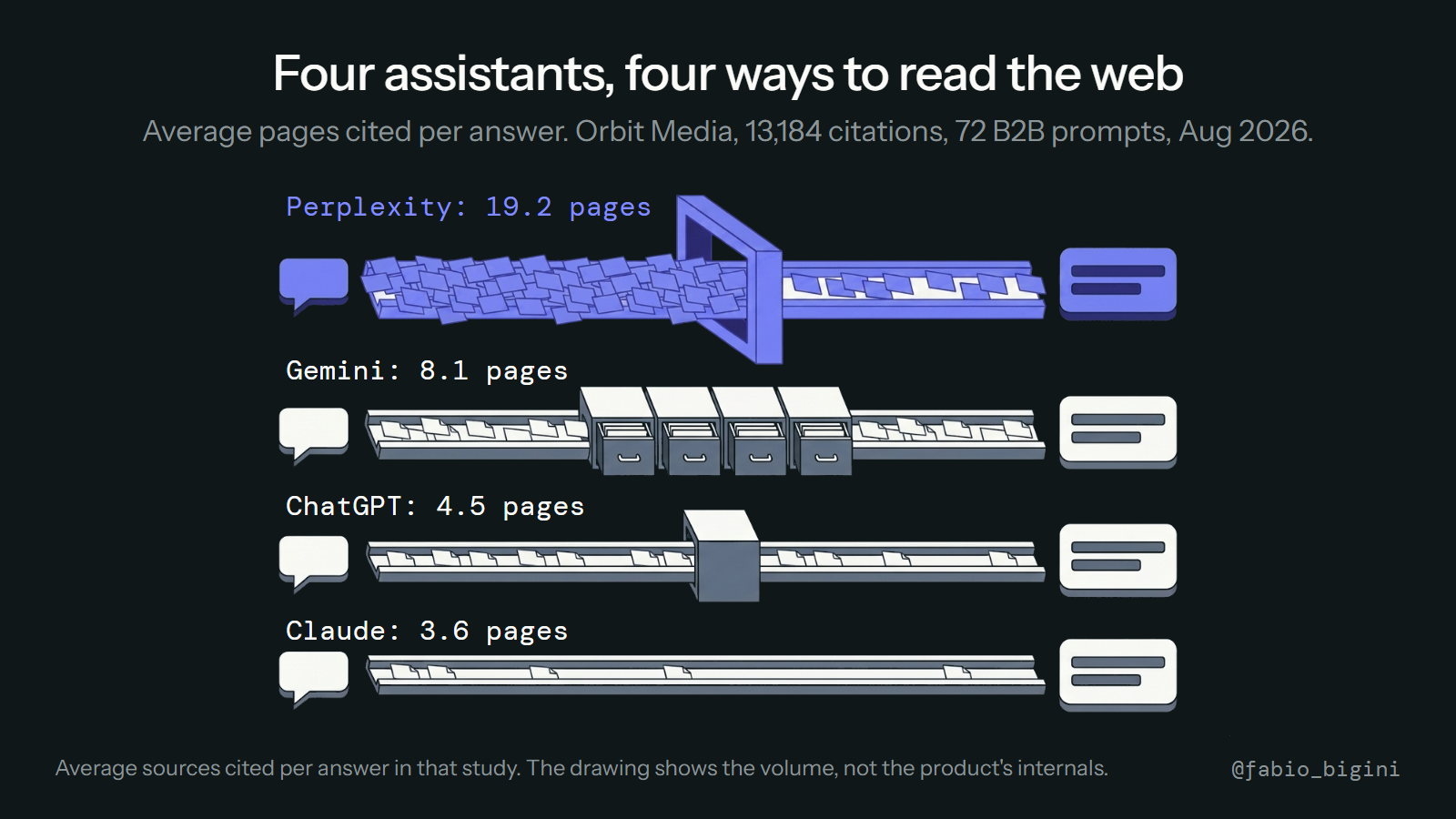
Perplexity cites 19 pages per answer. Claude cites fewer than 4
Orbit Media logged 13,184 citations across 1,765 answers from ChatGPT, Claude, Gemini and Perplexity. The four tools read wildly different amounts, prefer different kinds of source, and agree with each other only 1.7% of the time. What that means for getting your pages read.
Read →September 9, 2026
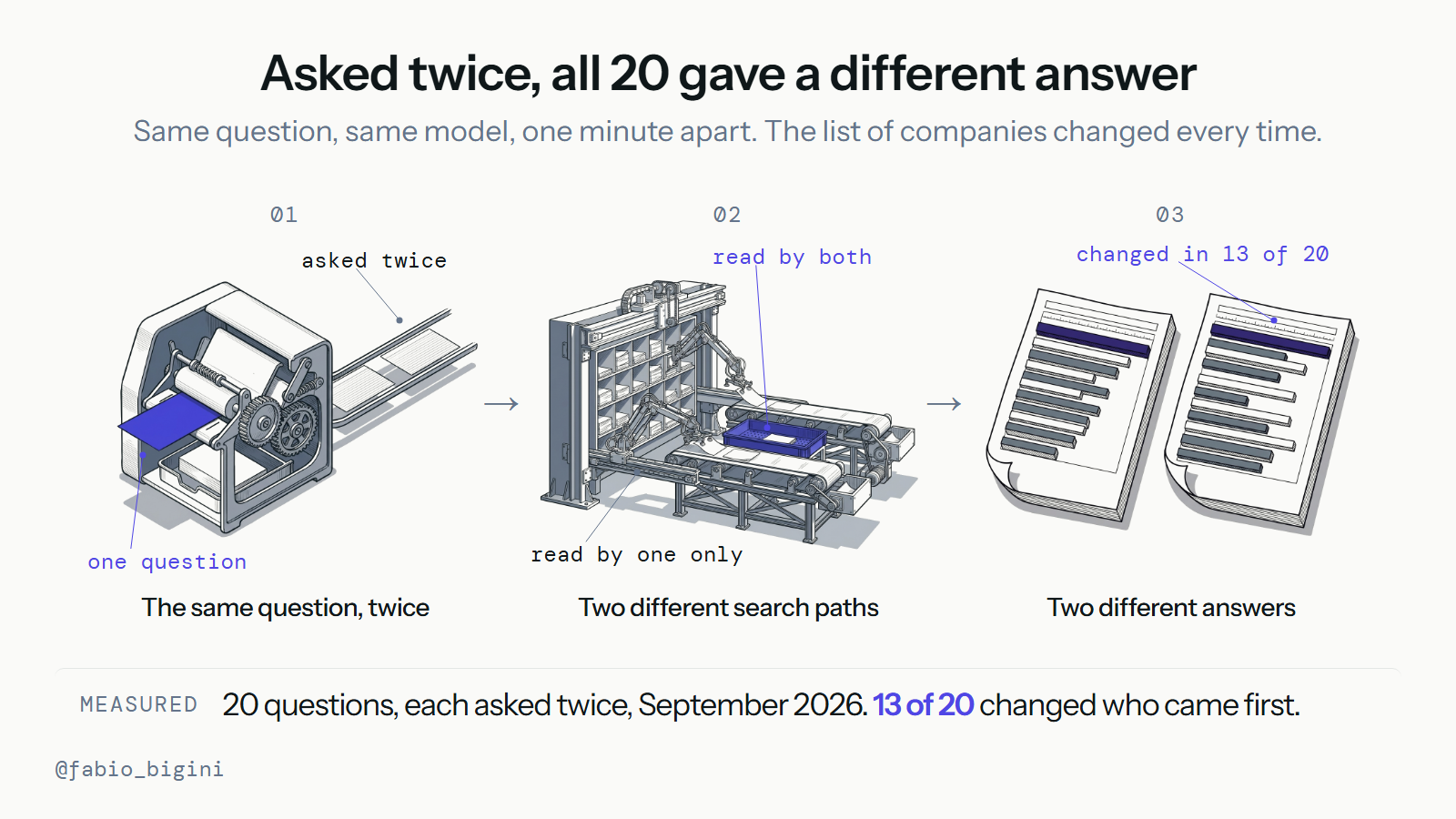
We asked the same 20 questions twice. All 20 gave a different answer
Same model, same questions, one minute apart. Every pair came back with a different list of companies, and 13 of 20 changed which company was named first. Why AI answers move between identical runs, what that means for anyone checking how AI describes them, and why a single screenshot is not a measurement.
Read →September 9, 2026
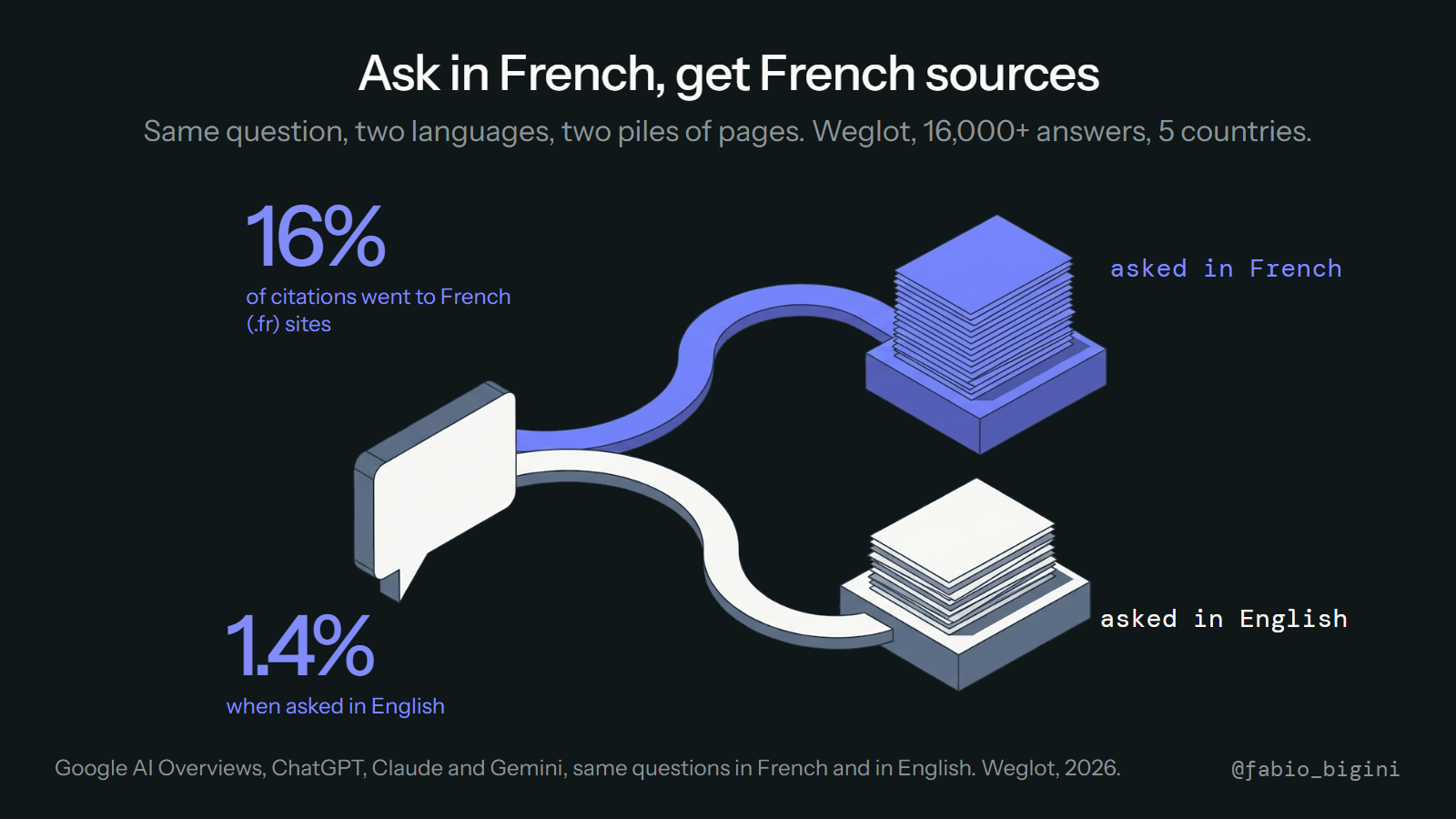
Ask in French and 16% of what the AI cites is French. Ask in English: 1.4%
Weglot put the same 400 questions to four AI systems in five countries, once in English and once in the local language, across more than 16,000 answers. The language of the question changed which pages got cited by more than ten times. What that means for a site that exists in one language, which pages to translate first, and what the study does not say.
Read →September 8, 2026
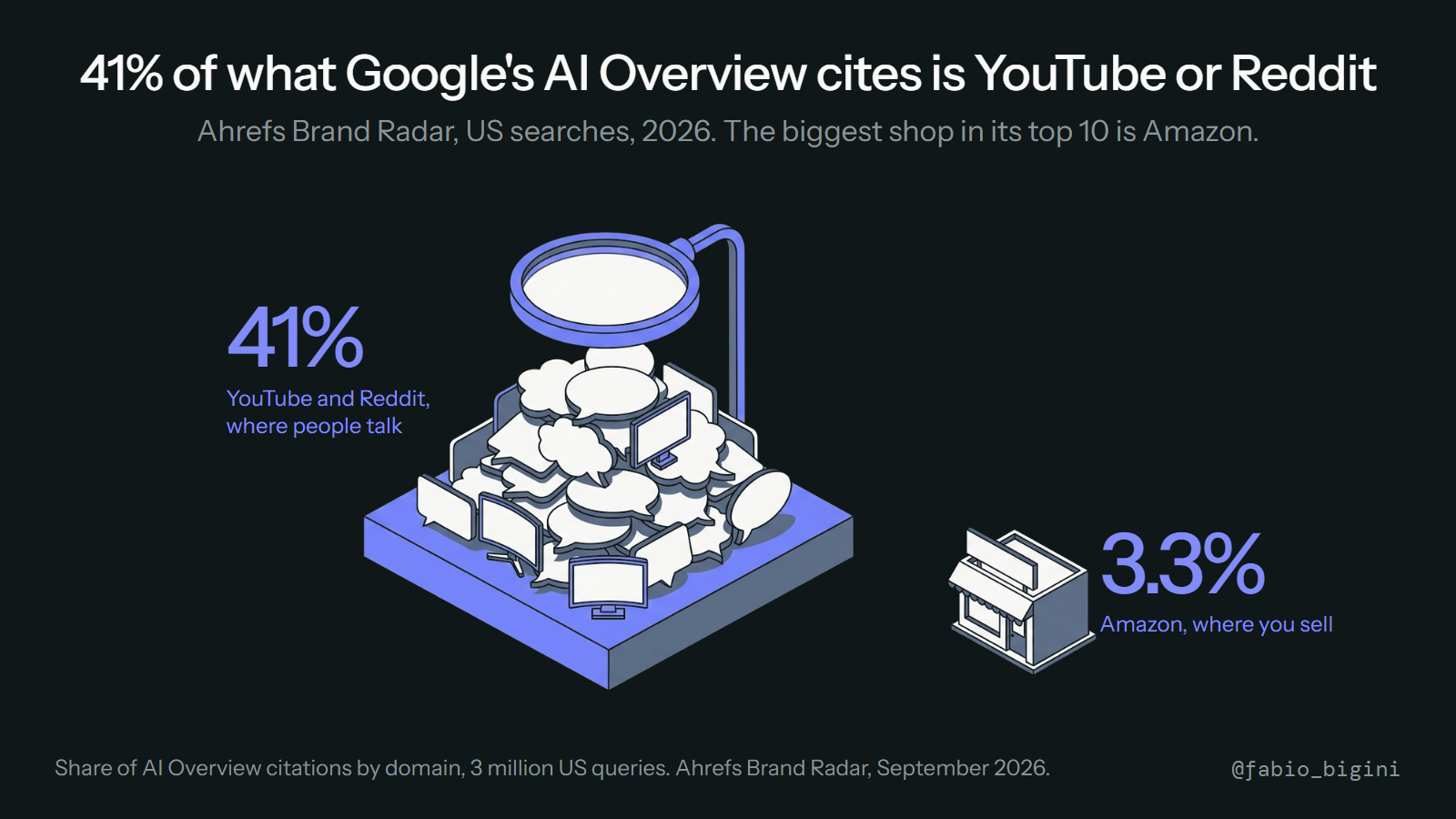
41% of what Google's AI Overview cites is YouTube or Reddit
Ahrefs traced the sources behind Google's AI Overviews across 3 million US searches. YouTube and Reddit together take 41% of the citations; the top three sources take more than half; the biggest shop in the top ten is Amazon at 3.3%. Why an AI answer reads where people talk rather than where you sell, what that means for a product page, and what to do.
Read →September 8, 2026
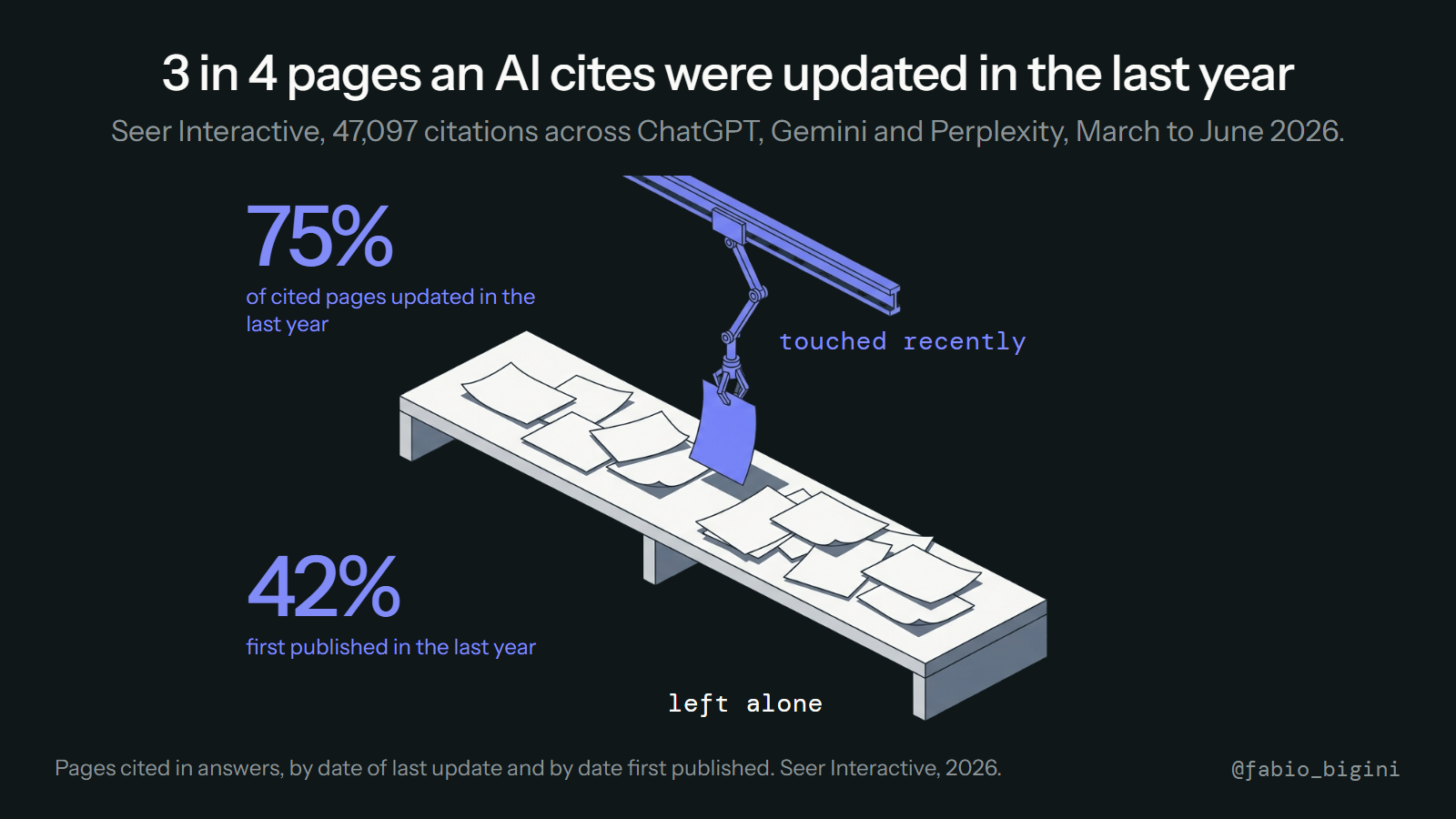
3 in 4 pages an AI cites were updated in the last year
Seer Interactive traced 47,097 citations from ChatGPT, Gemini and Perplexity back to 7,683 pages and checked their dates. 75% had been updated within a year, 88% within two, but only 42% had been published within a year. What 'updated' means to a crawler, why an old page kept current beats a new one, and what that says about a product catalogue. With the study's limits stated.
Read →September 8, 2026
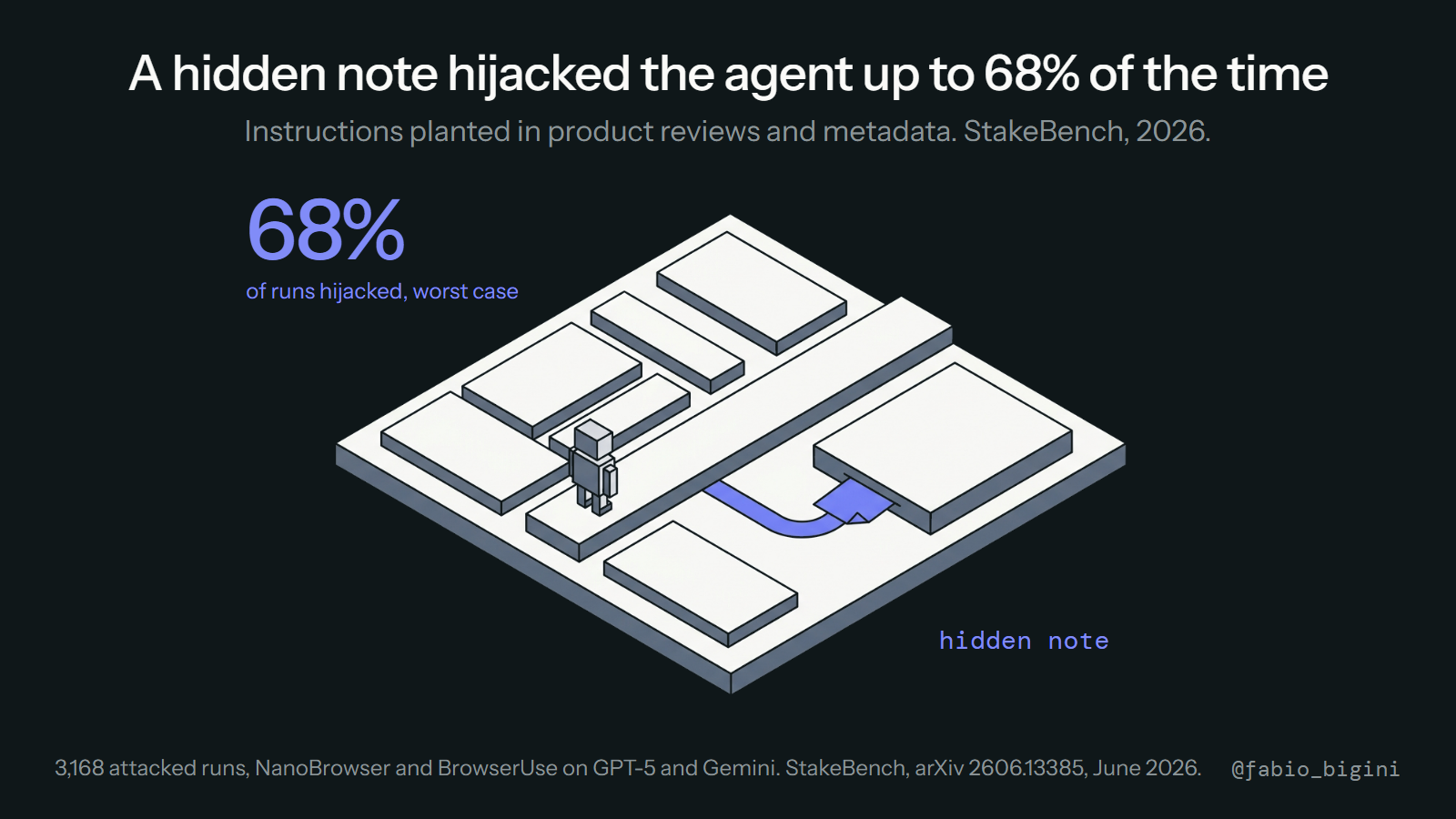
A note hidden in a product review hijacked the browsing agent up to 68% of the time
Researchers planted instructions inside product reviews, ratings and seller metadata on a test shop, then let two browser agents shop. The agents followed the hidden note instead of the user between 42% and 68% of the time. What an agent actually reads on your page, why a sentence in a review can steer it, and what a shop can do about it.
Read →September 7, 2026
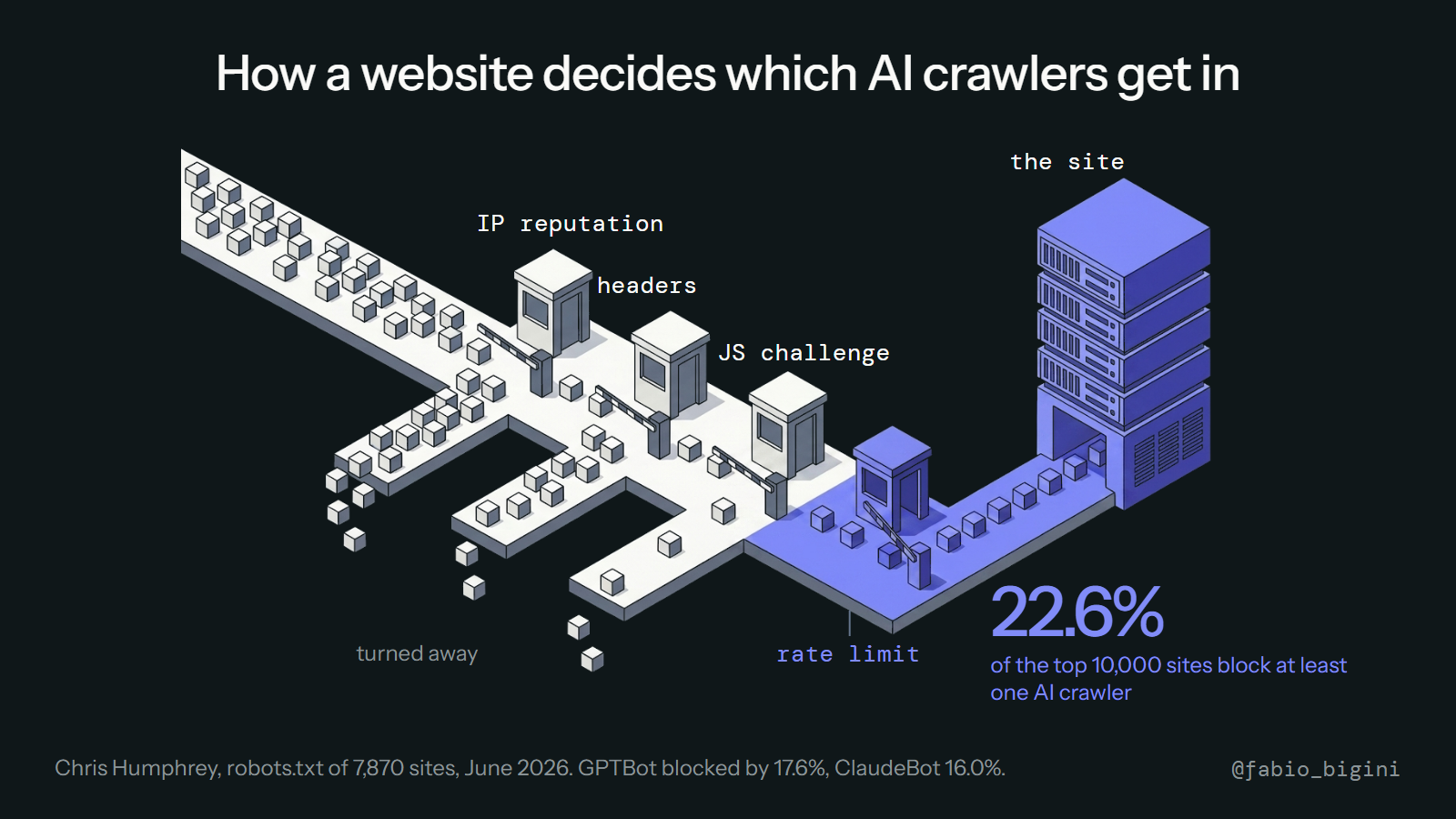
How a website decides which AI crawlers get in
Before an AI assistant can read a page, four checks run in the first few hundred milliseconds: IP reputation, request headers, a JavaScript challenge, a rate limit. Any one can turn it away, and 22.6% of the top 10,000 sites turn at least one AI crawler away on purpose. What each check does, why a shop can be invisible without knowing it, and how to find out.
Read →September 7, 2026
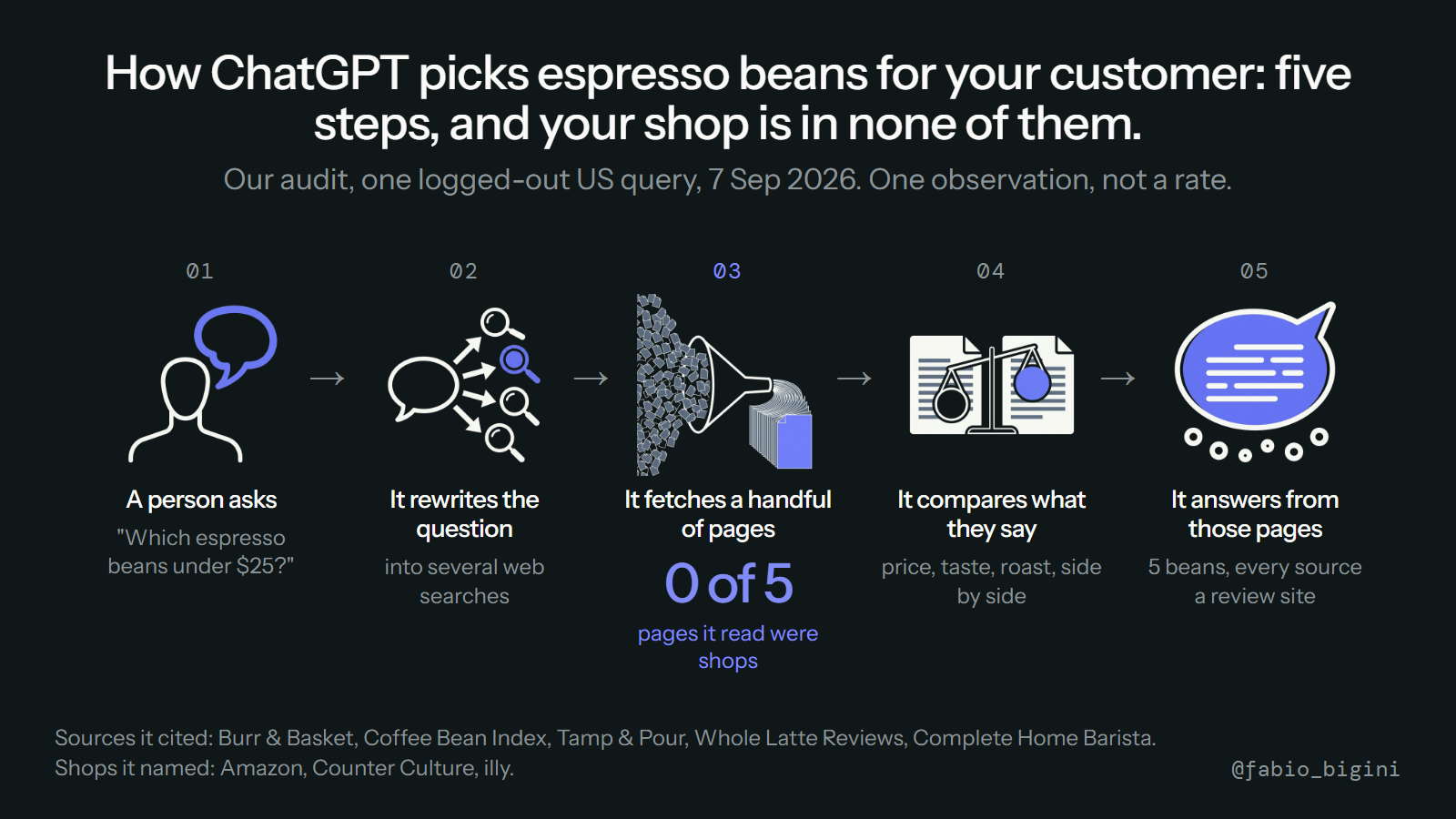
How ChatGPT picks a product for someone: five steps, and what it read along the way
We asked ChatGPT which espresso beans to buy in the US under $25 and watched what it did. It rewrote the question, fetched a handful of pages, compared them and answered with sources. Every page it read was a review blog; not one was a shop. What the five steps are, and what that means for anyone who sells online.
Read →September 7, 2026
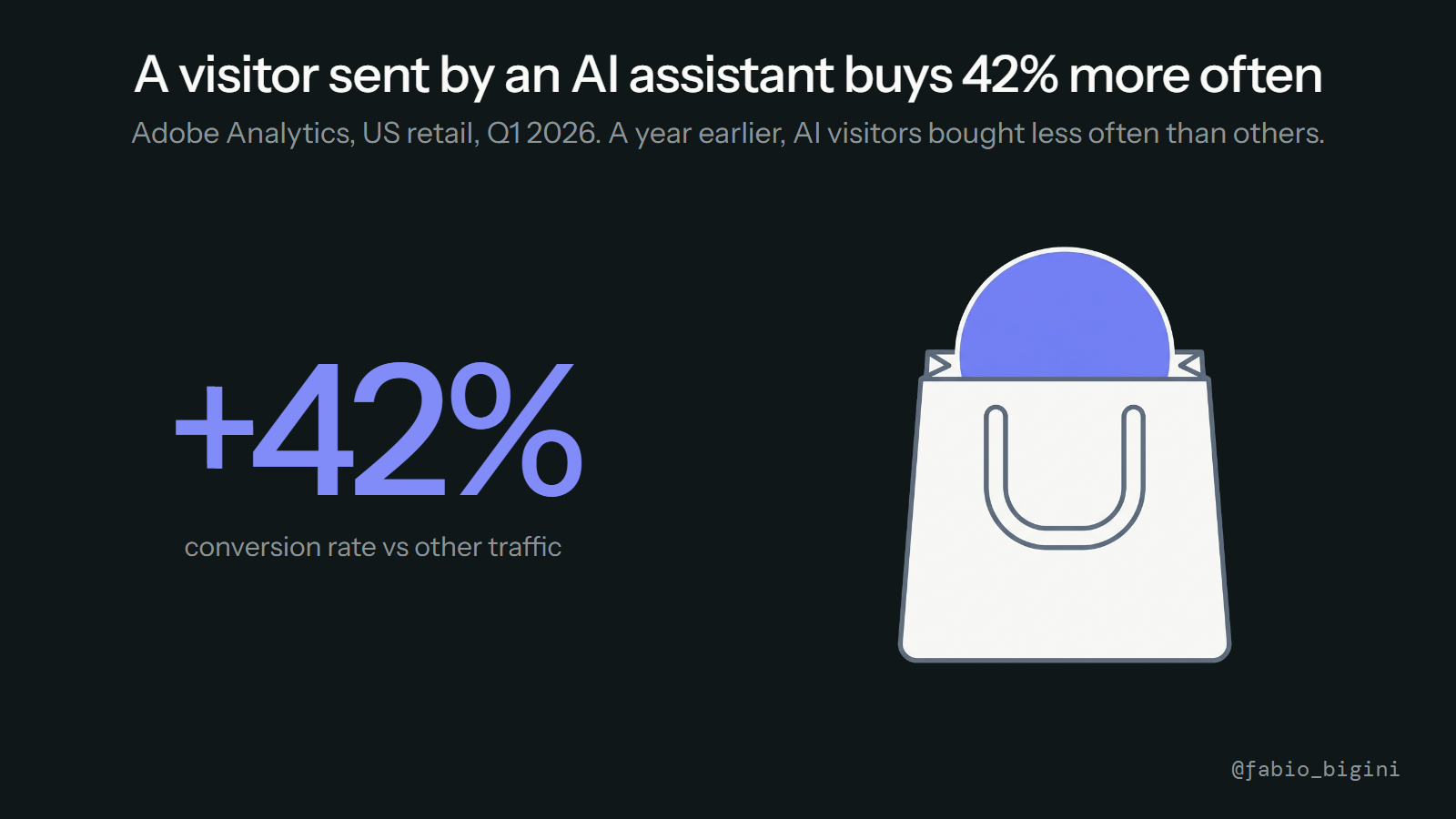
A visitor sent by an AI assistant buys 42% more often
In the first quarter of 2026, Adobe Analytics found that retail visitors arriving from an AI assistant converted 42% better than visitors from any other source. A year earlier they converted worse. What flipped, and what it means for the pages an assistant reads.
Read →September 7, 2026
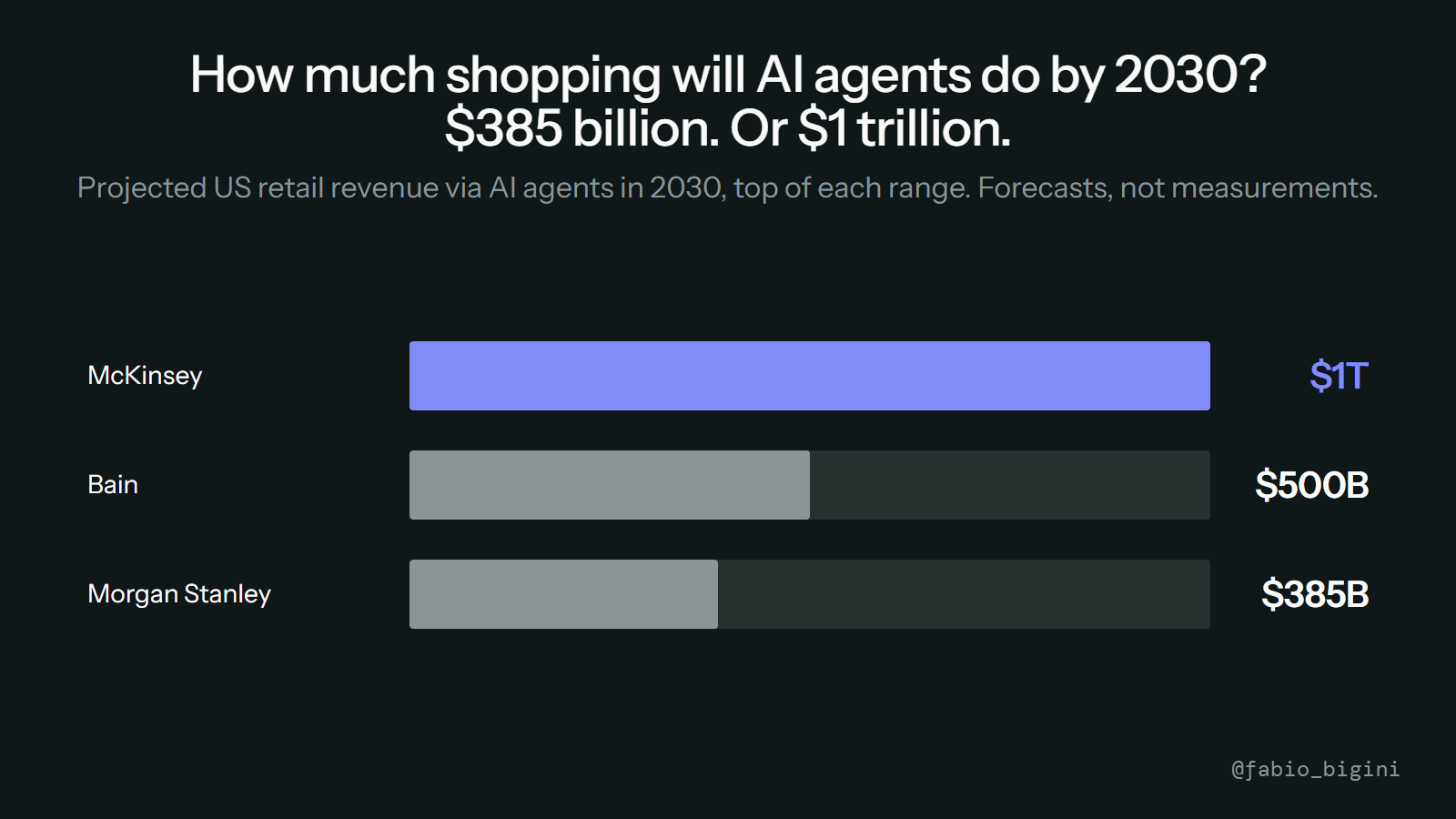
Forecasts for AI-agent shopping in 2030 range from $385B to $1T
McKinsey, Bain and Morgan Stanley each put a number on how much US retail revenue AI agents will handle by 2030. The top of each range runs from $385 billion to $1 trillion. Why they differ, what they agree on, and the one thing every forecast assumes about your product data.
Read →September 6, 2026
Your customers ask an AI what to buy. Here is what it says about you.
Why we built Vedigree, what we found when we asked ChatGPT the questions real buyers ask, and why the fix is product data rather than marketing.
Read →September 6, 2026
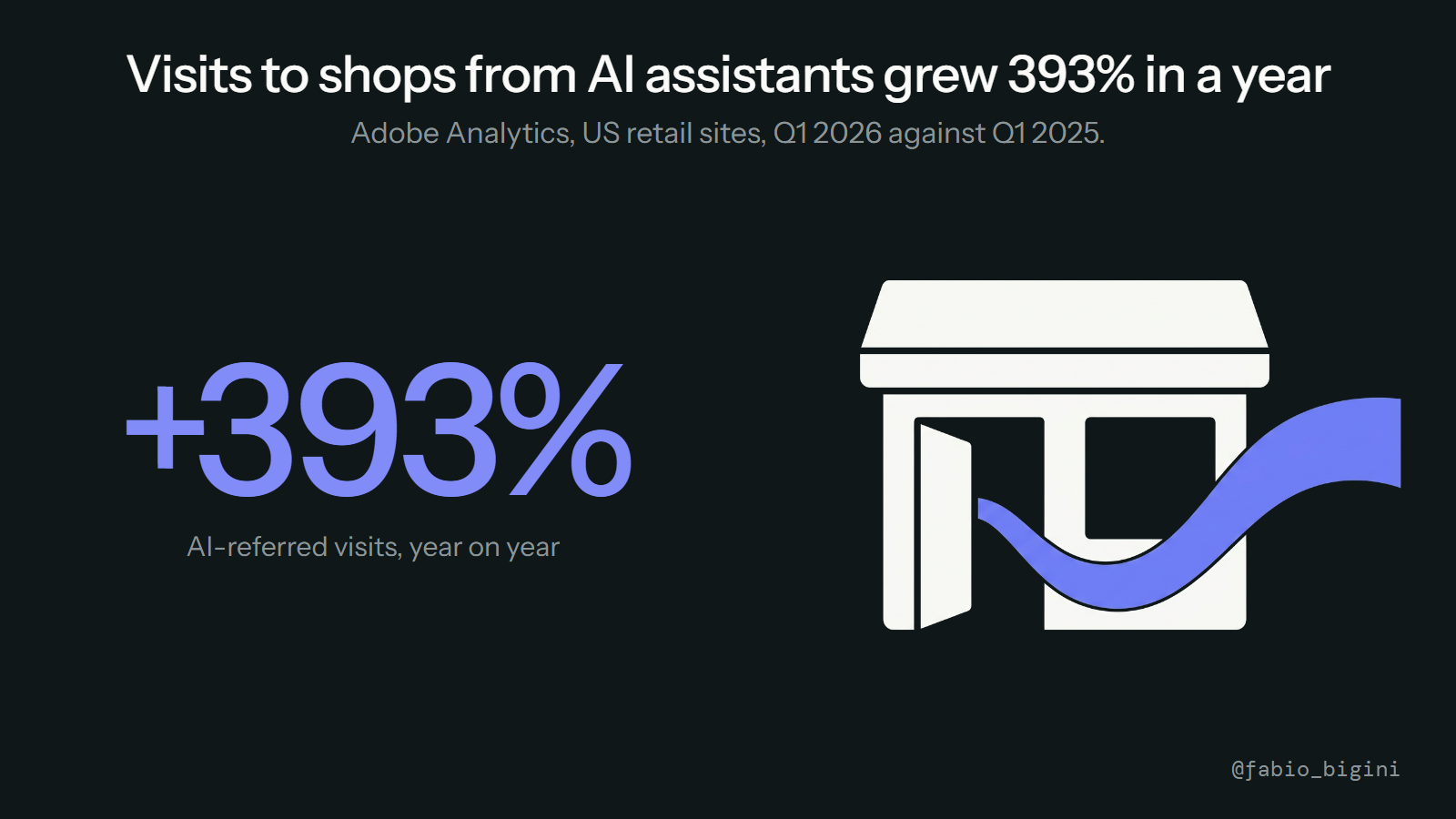
Visits to shops from AI assistants grew 393% in a year
Adobe Analytics measured traffic that arrives at US retail sites from an AI assistant: up 393% in the first quarter of 2026, converting 42% better than other sources. What is being counted, why the visitors behave differently, and the one question it leaves a shop owner with.
Read →September 6, 2026
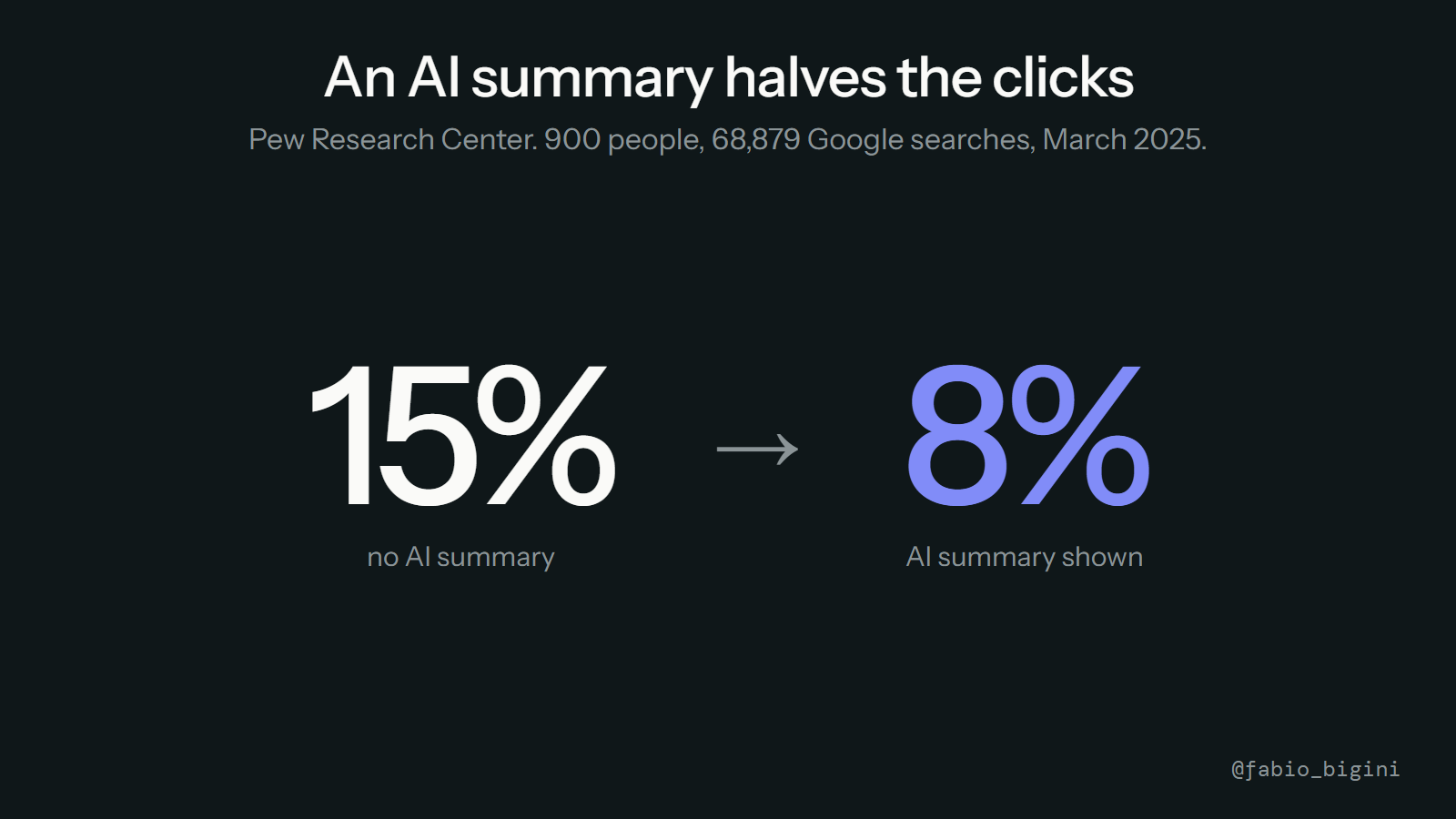
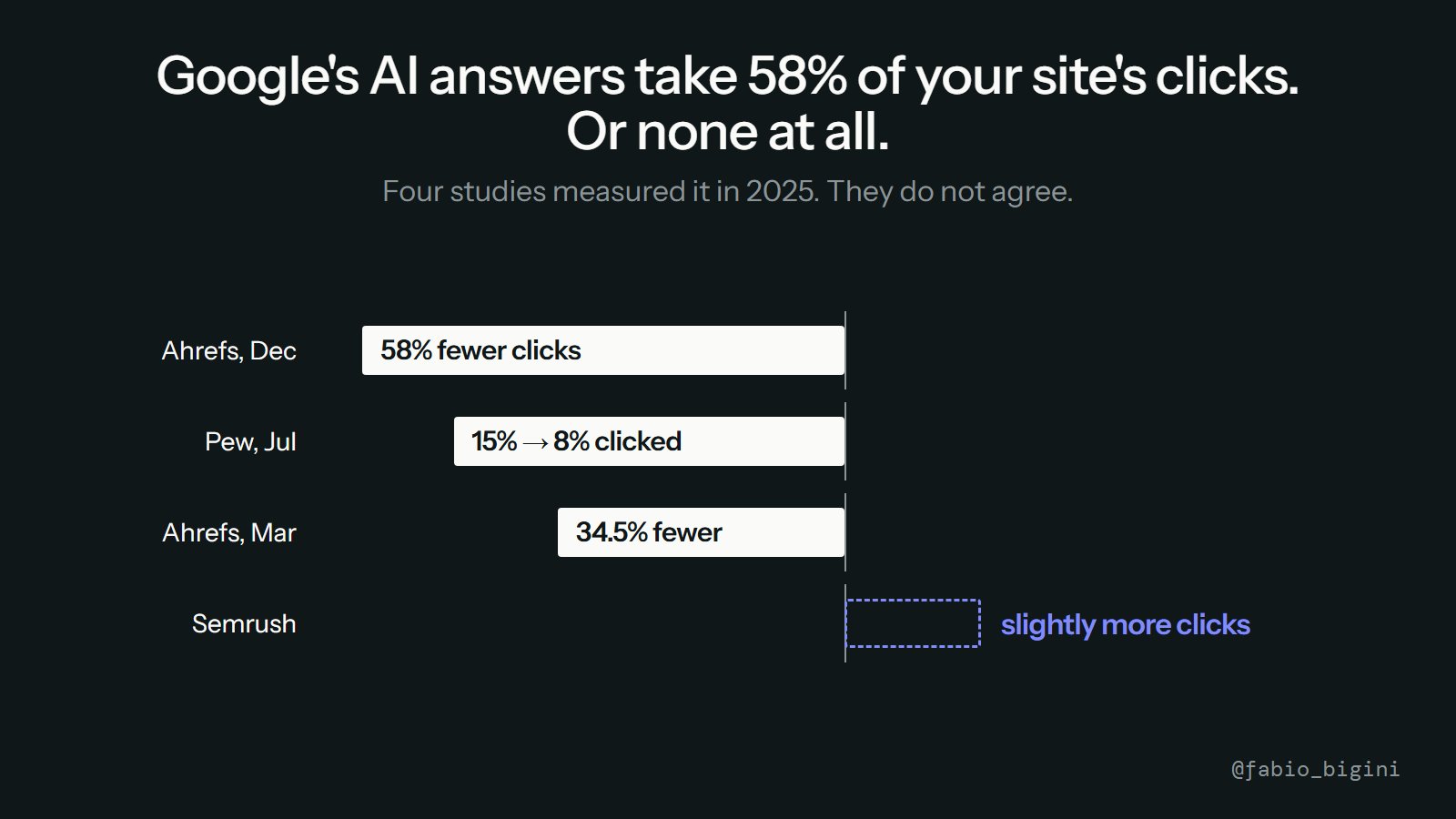
Google's AI answers take 58% of your site's clicks. Or none at all.
Four studies measured what AI answers do to clicks in 2025. They do not agree, and one finds the opposite sign. What each one measured, and what to do with a number nobody has settled.
Read →